Archives
-
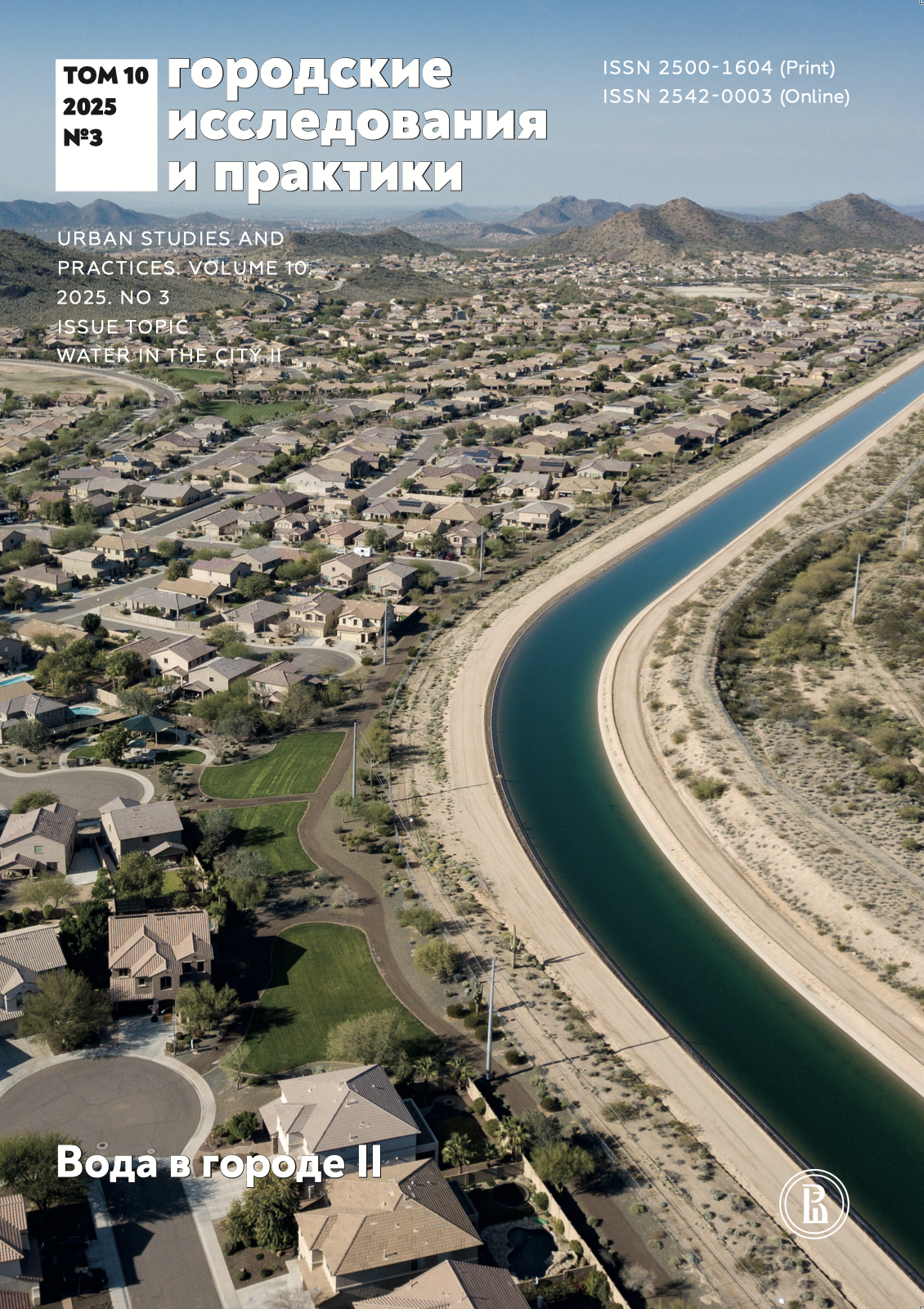
Water in the City II
Vol. 10 No. 3 (2025)Photo © Ted Wood/The Water Desk
License: https://creativecommons.org/licenses/by/4.0/
-
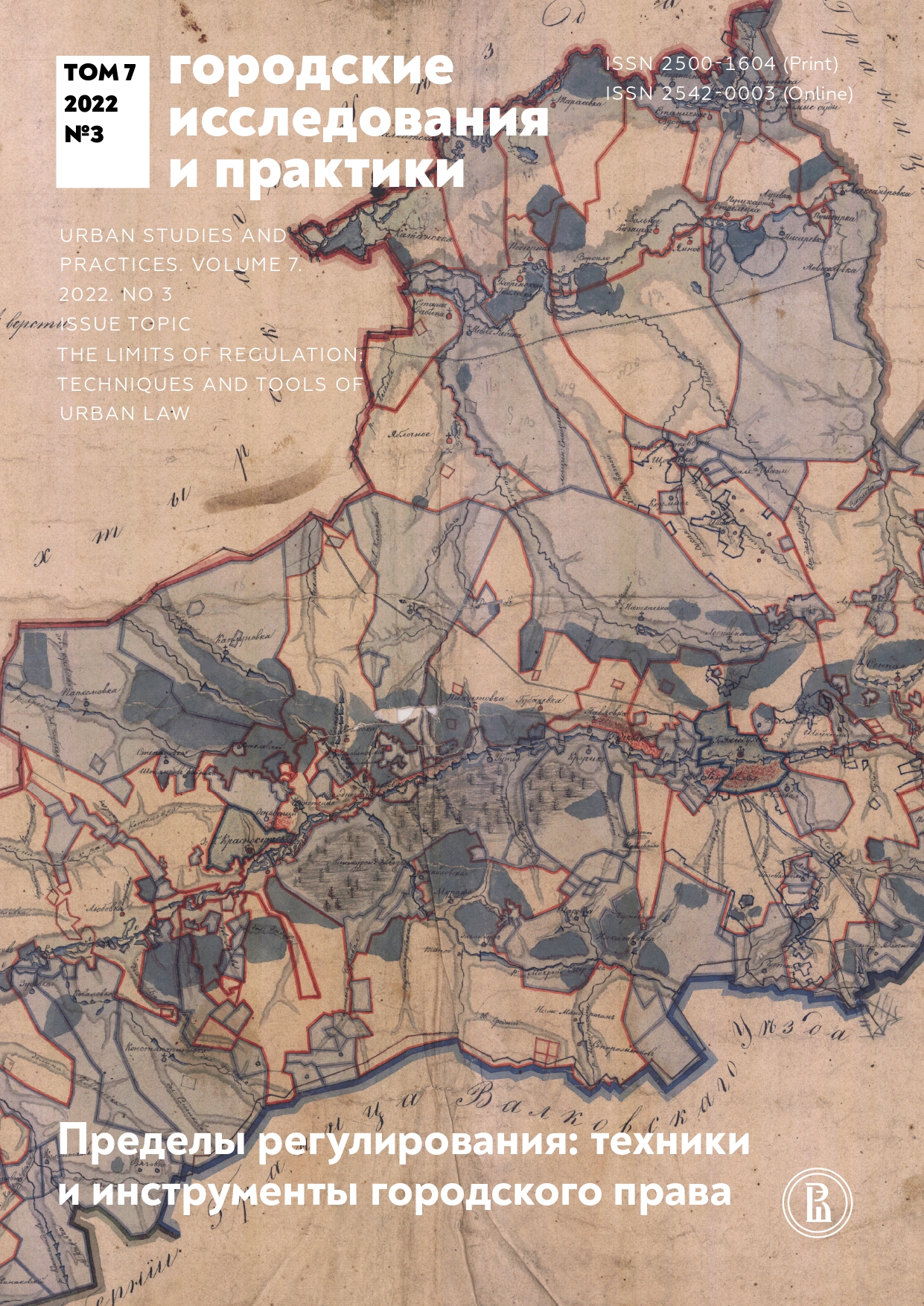
The Limits of Regulation: Techniques and Tools of Urban Law
Vol. 7 No. 3 (2022)This issue addresses two types of socio-economic order that refer to two radical forms of existence of urban law. These two forms are the neoliberal order European and American law and the Russian post-socialist order. The opposition of the two orders is based on the assumption that existing ways of describing the global order are insufficient to explain the space of change in which we find ourselves. This assumption does not presuppose assessments from the perspective of international law. It defines a strategy that explains how an accelerated transition to radical change occurred from a situation of global order. The perspective offered by this issue attempts to overcome the classical spatial logic of opposing center and periphery and to show that extremes and competing orders are mutually complementary and therefore cannot be in a hierarchical relationship.
-

Urban political geography
Vol. 7 No. 2 (2022)Does city air make you free? Or does it no longer do so? Cities spread across territory with the space of the urban, reducing density, dividing diversity into monotonous (and often isolated) enclaves, increasing the connectivity of highways while diminishing local connectivity — the connectivity of communities. The digital city is self-organized in networks, yet local action becomes ever more problematic. Smart city tools have brought the possibility of direct urban democracy closer than ever before, yet those same tools continue to amplify control and total surveillance, aggressive monitoring and behavioral regulation of city dwellers by authorities. It seemed that company towns would disappear with the declining role of industry in employment and the dispersal of increasingly creative urbanites across diverse service sectors — yet the degree of corporate influence over urban identity is perhaps at its highest: developers erase familiar neighborhoods from the map in the service of the spatial fixation of capital, while retail chains deliver the final blow to the family business fabric that organizes the city's social space. The predicted age of cities — when they would finally (or once again) assume full political decision-making power, displacing nation-states — seems to be postponed by the new intensification of national revanchism in the post-Soviet space (and beyond), which is once again reinforcing state borders and impeding cross-border cooperation.
The theme of this issue is declared as "Political Geography of Cities," which shapes the development of each study presented here along two obvious dimensions — geo-urbanistic and politico-geographical. Their roles appear clearly delineated: if the first dimension is responsible for the object of study (cities, urban environments, urban systems and networks), the second defines its subject (territorially expressed political processes, properties, and relations). In other words, urban spaces are examined here as political spaces — as spatial embodiments and representations of power, governance, interests, and other categories of a corresponding character.
-
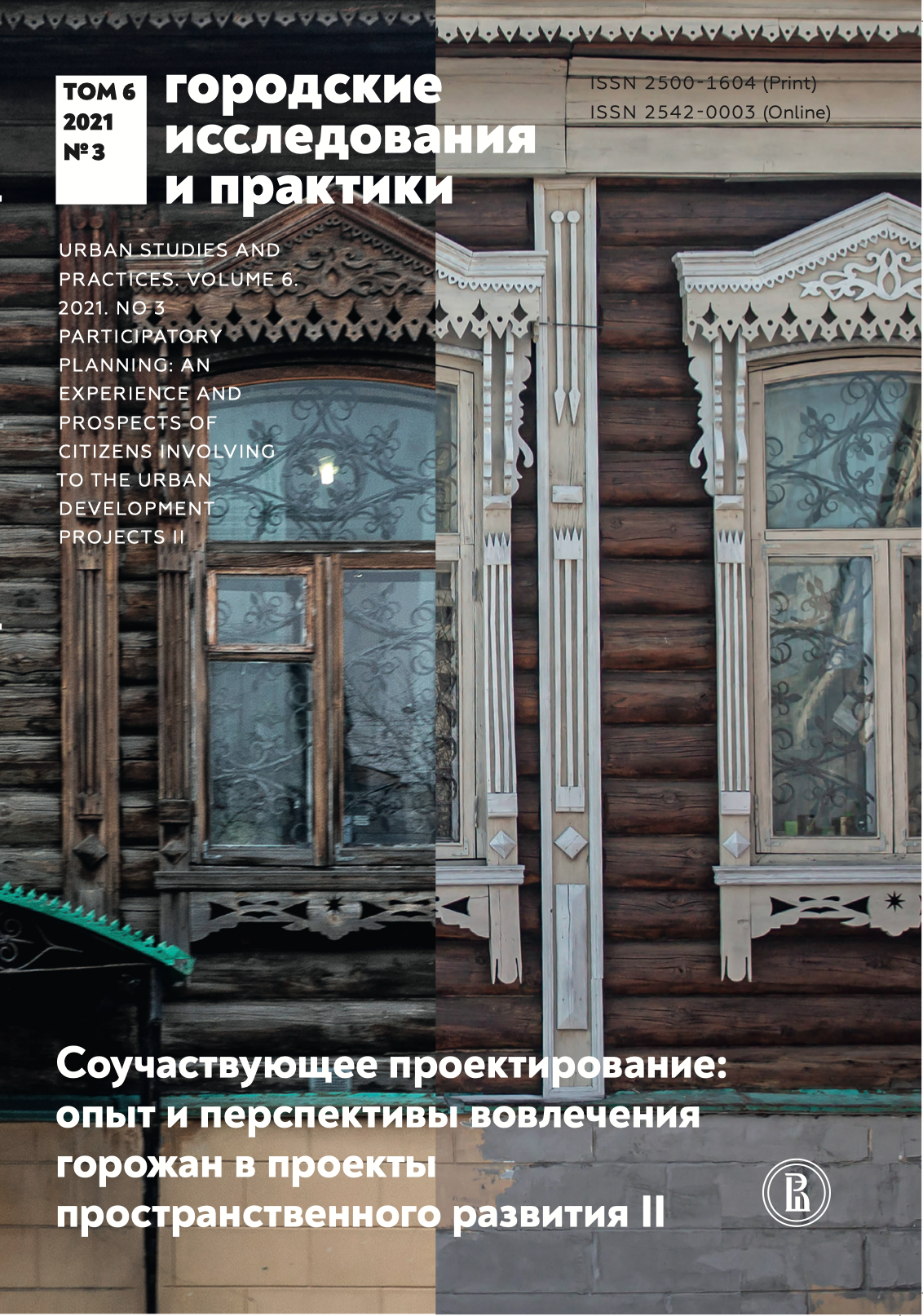
Participatory Planning: An Experience and Prospects of Citizens Involving to the Urban Development Projects II
Vol. 6 No. 3 (2021)Cover photo © Andrey Filatov
-

Industrial Heritage and Symbolic Capital: Provincial Towns in the Beginning of XXI Century
Vol. 6 No. 1 (2021)Photo © Andrey Leonov